Pearl Harbor and the Declaration of War
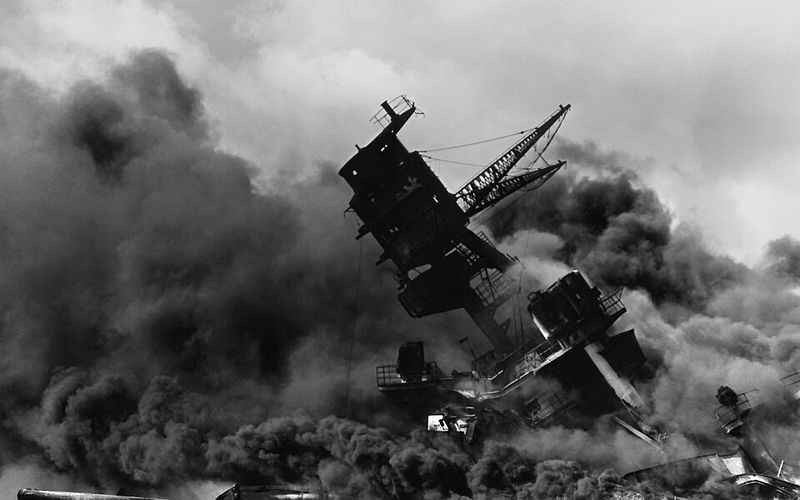
Japan attacked the U.S. fleet at Pearl Harbor, Hawaii, on December 7, 1941. The next day President Roosevelt asked Congress to declare war. The Senate voted unanimously; the House vote had one dissent, from Rep. Jeannette Rankin of Montana, who had also voted against entering World War I in 1917.
Resulting law: Declaration of war on Japan (Pub. L. 77-328)
From event to law
How did Congress vote to enter World War II? Open any vote below to see every legislator.
- EventDecember 7, 1941
Attack on Pearl Harbor
Japanese forces attack the U.S. naval base at Pearl Harbor and other U.S. bases in the Pacific.
- EventDecember 8, 1941
"A date which will live in infamy"
President Roosevelt addresses a joint session of Congress and asks for a declaration of war.
- VoteDecember 8, 1941
Senate votes
The Senate approves S.J. Res. 116 without a dissenting vote.
Senate, 77th Congress, roll call 85
82 yea0 nayPassed
See how every senator votedParty Yea Nay Democrat 56 0 Republican 24 0 Independent 1 0 Progressive 1 0 - VoteDecember 8, 1941
House votes
The House approves the declaration with one no vote.
House, 77th Congress, roll call 77
388 yea1 nayPassed
See how every representative votedParty Yea Nay Democrat 234 0 Republican 149 1 Progressive 3 0 American Labor 1 0 Ind. Democrat 1 0 - LawDecember 8, 1941
Signed
President Roosevelt signs the declaration the same afternoon.
- What came nextDecember 11, 1941
Germany and Italy
Germany and Italy declare war on the United States, and Congress declares war on both the same day.
Look up the votes
Party labels are those used at the time of the vote. The parties' coalitions and positions have changed over time, so a party name in 1864 or 1919 does not map directly onto the party today.
Sources
- National Archives: Joint Address to Congress Leading to a Declaration of War Against Japan
- U.S. House History: Jeannette Rankin
- Voteview: Congressional Roll-Call Votes Database (vote tallies and member votes)
Tallies count members recorded as voting yea or nay. Official counts printed at the time can differ by a vote or two because of pairs and later corrections.